A Platform, a Pub and a Vanished Yard: Walking Penrith's Railway Past
Penrith station is easy to treat as a pit stop. You arrive, you find the exit, you head for the town or the fells. But the station itself is part of the story. This self-guided loop starts on the platforms, stays within a mile and a half of the town centre, and takes roughly 90 minutes at an unhurried pace. It is not a museum tour. It is a chance to read the railway in the stone, the road names and the buildings that grew up around the West Coast Main Line.
You will need comfy shoes, a charged phone and a rough idea of your next train. If you are starting on the platform, make sure you have a valid ticket or pass for the station area. If not, begin at the station forecourt and join the route there. Either way, check live departures before you get absorbed. Penrith is a working station, not a heritage set.
Start on Platform 1: the Victorian threshold
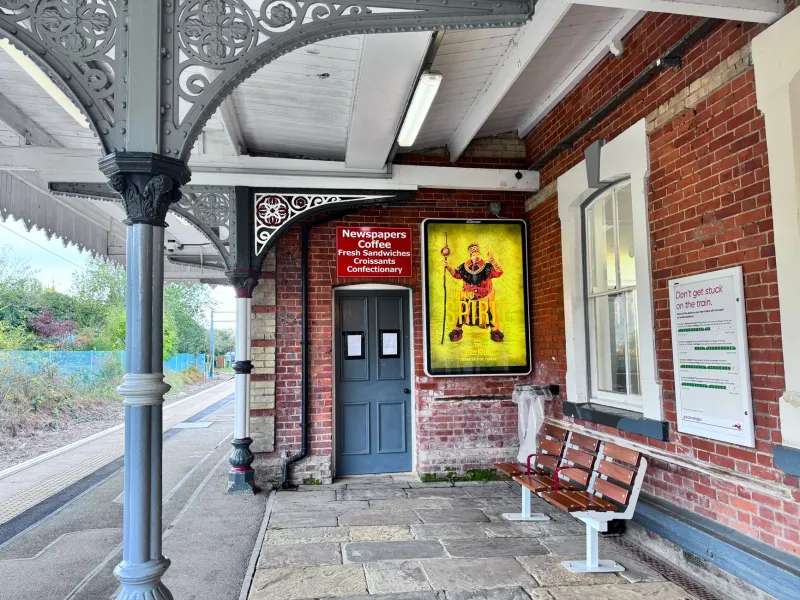
Stand on Platform 1 and look up. The canopy, the brackets and the stonework are the opening chapter. Penrith's station arrived with the Lancaster and Carlisle Railway in the mid-1840s, when the West Coast route was being stitched together through Cumbria. The current buildings have been altered, cleaned and adapted, but the basic arrangement is Victorian: platforms, a booking hall, a hotel next door and a goods yard doing the unglamorous work behind the scenes.
Give this first stop 10 to 15 minutes. Notice how the station sits above the town rather than in the middle of it. That is not an accident. Railway engineers wanted straight, level track, and Penrith's centre had to fit around the result. The walk down into town is a reminder that stations are often built for the line first and the place second.
Exit through the main station building and pause on the forecourt.
The hotel, the bridge and the first railway suburb
Turn round and look at the front of the station. The old railway hotel — now the Station Hotel — is the obvious clue to how important this stop once was. Railway hotels were not just places for visitors. They were for commercial travellers, railway staff and anyone who needed a bed near the platform before an early connection. The building's position, almost within a train's length of the canopy, tells you that the railway expected people to arrive tired and leave early.
From the forecourt, look along the road and the bridge. The railway cut Penrith in two, and the bridges and underpasses became the everyday links between the station side and the town side. Walk down Station Road towards the centre. This is not a grand civic boulevard. It is a working street of shops, offices, guest houses and terraces, the sort of ordinary fabric that grows up around a station and rarely gets a blue plaque.
Take 10 minutes here. Look for old shopfronts, boundary walls and the way the road bends. If you are hungry, this is a good place to pick up a sandwich. The walk is short, but a station history loop is always better with a snack.
Where the goods yard went
Before you reach the town centre, make a small detour. From the station forecourt, look back along the access road and the open ground near the car parks. This was railway land with a different job. The goods yard handled cattle, coal, parcels, mail and agricultural kit. Penrith was a market town, and the railway did not just carry passengers to the Lakes. It carried the everyday stuff of an agricultural economy.
The yard is largely gone now. Car parks, sheds and access roads have taken its place. That is normal. Most Victorian goods yards have been erased because they were not pretty enough to save. But you can still read the scale of the space. It is wider than a passenger station needs. That width is the ghost of sidings, loading docks and wagons waiting for a path.
Spend five minutes here, then head back towards Station Road and continue into town. Do not wander into any operational railway land. The route is about looking, not trespassing.
Into town: banks, churches and the railway's long shadow
Carry on downhill and you will meet Brunswick Road and the edge of the town centre. The railway's shadow follows you. Penrith's shops, banks and inns grew up around the market place, but the station gave the town a second front door. Visitors could arrive from London, Manchester or Scotland and be in the fells by lunchtime. That is still the basic promise of Penrith station today.
Turn towards the town centre and take a slow loop through the streets around Cornmarket and Middlegate. You are not looking for railway relics here. You are looking for the everyday buildings that the railway made possible: warehouses, offices, pubs and shops that served travellers and the people who worked on the line. The railway did not just build stations. It built customers.
If you have time, add a short detour to Penrith Castle or St Andrew's Church. Neither is a railway building, but both help explain why the station ended up where it did. Penrith was already a significant town before the trains arrived. The railway made it a gateway.
The return leg and the platform clock
Head back up Station Road the way you came. The climb is gentle but noticeable. Give yourself 15 to 20 minutes to get back to the platform, longer if you have been distracted by shops or coffee. Back at the station, check the departure board before you do anything else. Then find the platform clock and give it a moment. It is the least romantic part of the walk and the most useful.
The whole loop is about 1.5 miles. Allow 90 minutes at an easy pace, or two hours if you stop for food. It works in almost any weather, though the station forecourt and the road sections are exposed. Wear something reasonably waterproof and keep an eye on the time if you are catching a train.
Practical notes for rail travellers
Start and finish at Penrith station. The route is mostly on pavements, but Station Road has a slope and the town centre has uneven surfaces. If you have mobility needs, check the station's step-free access and lift arrangements before you travel. The walk can be shortened by skipping the town-centre loop and heading straight back from the hotel.
Do not rely on the station as a luggage store unless you have checked the facilities in advance. A small rucksack is fine. A large suitcase will make the pavements and the climb back up Station Road less fun. If you are between trains, keep an eye on the boards. Penrith is not a terminus, and the West Coast Main Line does not wait for anyone.
Finally, treat the station as a place, not just a pause. The stonework, the hotel, the wide gaps where the goods yard used to be and the ordinary streets below it are all part of the same railway story. You can walk it in an afternoon and still catch your train. That is the joy of a gateway town.