Where the Rails Ran Out: Walking the Eden Valley's Ghost Line from Penrith
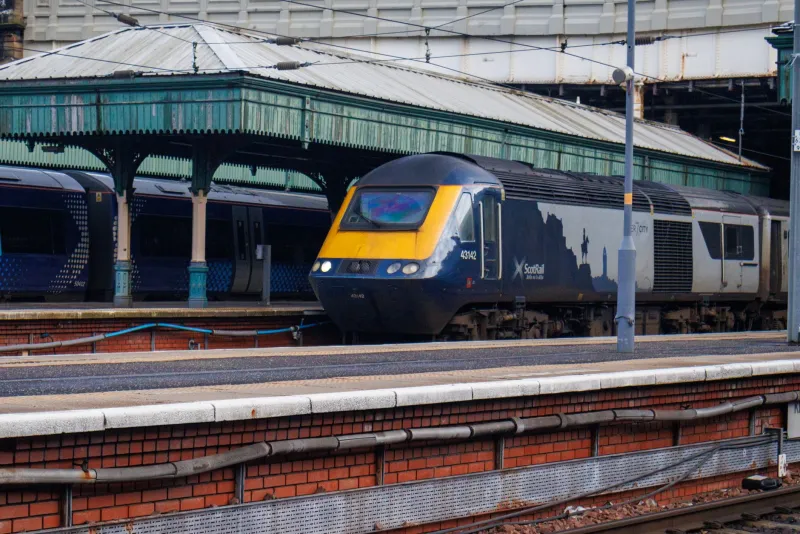
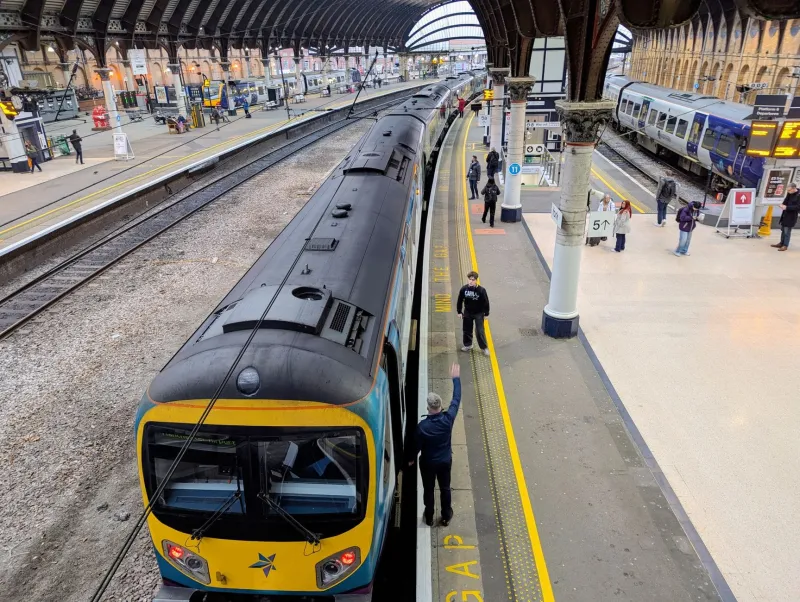
Stand at the south end of Penrith's platforms and most people look the other way. North to Carlisle, south to Oxenholme, or west with the Lakes on their mind. But just beyond the station throat, a different line once peeled away from the West Coast Main Line and slipped quietly east along the Eden Valley. It was the Eden Valley Railway, and for a century it connected Penrith with Kirkby Thore, Temple Sowerby, Appleby East, Warcop and Kirkby Stephen East.
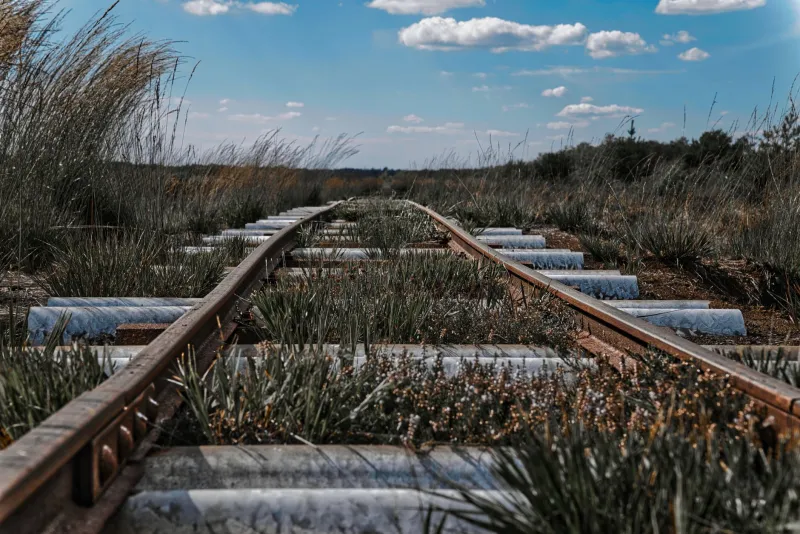
The passenger trains went in 1962. Freight hung on to Warcop for military traffic until 1989, and a heritage operation now keeps a short stretch alive. But the line's ghost is still walkable — not as a neat, waymarked trail, but as a route-finding day out through fields, lanes and overgrown cuttings. It is a proper walk, not a platform amble, and you can do it without a car.
The branch that slipped away
The Eden Valley Railway opened in 1862, built to link Penrith with the growing network around Kirkby Stephen and the Stainmore route to the North East. It left the main line at Eden Valley Junction, south of Penrith, and swung east through the Eden's wide, flat valley. The settlements it served were small but stubborn: Kirkby Thore, Temple Sowerby, Appleby East, Warcop, Sandford.
Appleby is the giveaway. The town already had a station on the Settle–Carlisle line, and the Eden Valley line gave it a second one — Appleby East — on the other side of town. Two stations, two different railways, one very Cumbrian compromise. When the passenger service ended, the valley lost a direct rail link that has never come back. The A66 corridor and the local bus did not replace it so much as absorb it.
Before you set off
This is not a continuous signed trail. Parts of the old formation are under the A66, parts are on private land, and parts have simply returned to hedge and pasture. The walk below links public footpaths, bridleways and quiet lanes that shadow the old route. You will need OS Explorer OL5 and OL19, a decent pair of boots and a willingness to check a map at gates. Do not treat embankments as public rights of way unless they are clearly on the map.
The full Penrith to Appleby East route is roughly 14 miles and will take most of a day. If that sounds too much, split it. Penrith to Temple Sowerby is about 10 miles with a bus back along the A66 corridor. Or walk the shorter Appleby East to Warcop section and check whether the heritage railway is running.
Penrith to Kirkby Thore: the first clues
From Penrith station, head into town and pick up the footpaths and lanes south-east of the A66, working towards Kirkby Thore. This is the least obvious section. The old line has been sliced by road improvements and field boundaries, and the junction itself has vanished into the modern railway layout.
But keep your eyes low. A straight field boundary, a slight shelf in the grass, a line of mature hedgerow that runs too deliberately across the valley — these are the tells. Railway surveyors liked straight lines and gentle gradients, and the Eden Valley line was no exception. Where the modern A66 sweeps and curves, the old railway tended to go grimly, sensibly straight.
Kirkby Thore is the first real stop. The station site is not a visitor attraction and should be treated with respect — this is private land and working farmland. But the village itself gives you a good sense of why the line existed: a scatter of houses, a church, a road that once had a station at the end of it. The railway made these places feel connected to Penrith and Carlisle. Without it, they feel like places you pass through.
Kirkby Thore to Temple Sowerby: platforms in the hedges
The next stretch is where the ghost line starts to show itself. Between Kirkby Thore and Temple Sowerby, the old formation appears as a raised strip through fields, sometimes with a low stone bridge or a brick abutment where a stream once ran under the rails. None of it is grand. That is the point. This was a rural branch line, built to a budget, and its remains are modest: a wall here, a culvert there, a cutting that has gone green and quiet.
Temple Sowerby is a good halfway halt. The village sits just off the old route, and the station area has long since been absorbed into the village's edge. If you are splitting the walk, this is the place to bail out and wait for a bus. If you are pressing on, refill your water bottle and prepare for the long curve towards Appleby.
Temple Sowerby to Appleby East: the long curve
This is the most satisfying part of the walk. The line curves south-east, following the Eden's wider valley, and the views open up towards the North Pennines. You are walking through the landscape the railway was built to serve: rich farmland, scattered woods, the river never far away.
The old formation is not always walkable, so the route weaves between field paths and lanes. Look for the line of the embankment where it survives, and for the odd bridge that now carries nothing but a farm track. These are the bits that today's station users rarely notice — the abandoned infrastructure of a railway that once mattered enough to have its own timetable, its own station masters and its own share of the valley's life.
As you approach Appleby, the line's last trick is its position. Appleby East station sits on the eastern edge of town, a mile or so from the Settle–Carlisle station on the western side. The station building survives, but it is not a ticket office any more. Walk past it, and you have completed the ghost line. Walk on into town, and you have a choice: train or bus.
The station at the end
Appleby's Settle–Carlisle station is the practical finish. Trains run north to Carlisle, where you change for Penrith. It is a loop rather than a direct hop, but it is a genuinely useful one: the Settle–Carlisle line is one of the country's great railway journeys, and a short evening run up the Eden Valley is no bad way to end a day spent chasing its lost cousin.
If the trains do not line up, the bus back along the A66 corridor is the fallback. Check Stagecoach timetables before you set out. The valley is not remote, but it is rural, and rural timetables have a way of becoming theoretical on a Sunday.
Why the ghost line still matters
The Eden Valley Railway is not just a curiosity for railway historians. It explains the shape of travel in this part of Cumbria. It explains why Temple Sowerby and Kirkby Thore have no station. It explains why Appleby has two station sites and why the A66 corridor bus carries the weight the railway once did. It explains why Warcop has a heritage railway instead of a mainline service.
It also explains why Penrith station is more than a gateway to the Lakes. Look south from the platforms and you are looking at the junction where a whole valley's railway history branched off. The rails are gone, but the line has left its mark on the fields, the roads and the way people move. Walking it is the best way to read that mark.
Practical notes
- Start: Penrith station. Finish: Appleby station (Settle–Carlisle), with a train to Carlisle and a change for Penrith.
- Distance: roughly 14 miles Penrith to Appleby East, plus a mile into Appleby. Allow 6–7 hours of walking.
- Map: OS Explorer OL5 and OL19. A compass and a charged phone are sensible.
- Terrain: field paths, lanes, stiles and gates. Some road walking. Not suitable for pushchairs or road bikes.
- Respect private land. Stick to public rights of way and do not climb on embankments or bridges unless the map says you can.
- Check the heritage Eden Valley Railway at Warcop for operating dates if you want to ride a surviving stretch.
- Bring layers. The Eden Valley is not the fells, but it is still Cumbria, and the weather can turn a straightforward walk into a character-building one.