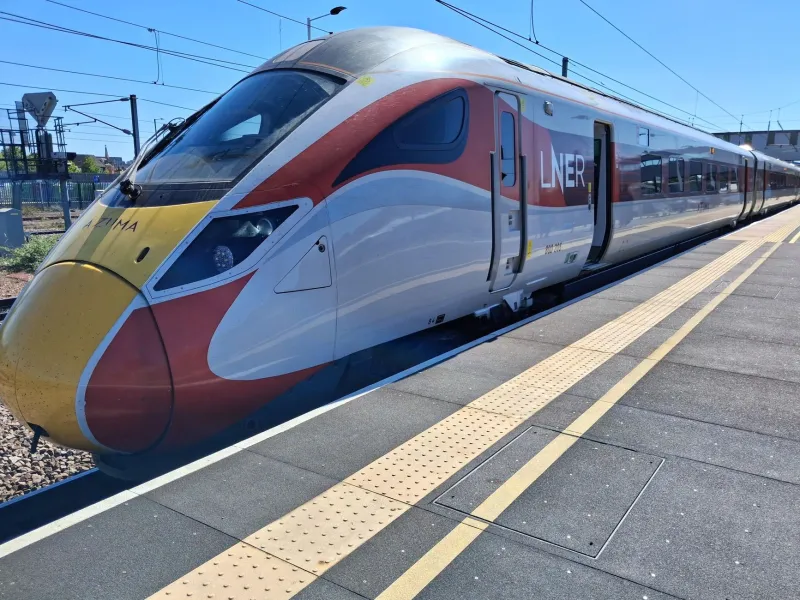
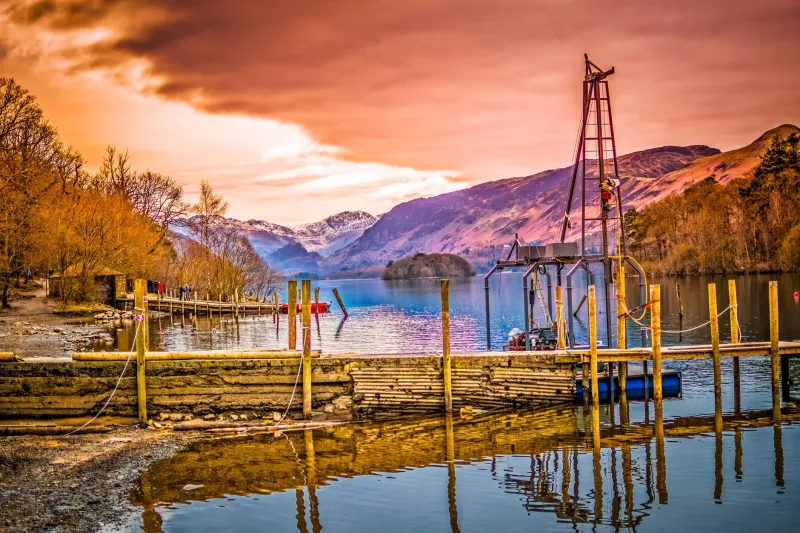
Keswick's Missing Link: Why the Rails Should Return to the Northern Lakes
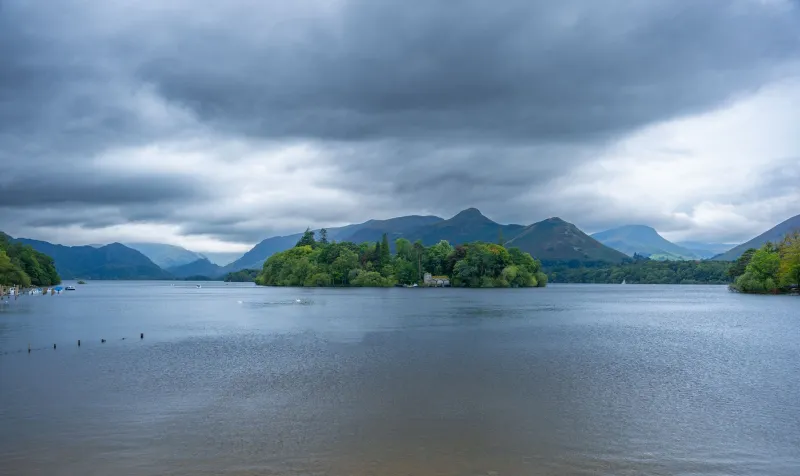
Arrive in Keswick on a summer Saturday and the first thing you notice is the traffic. The second is the queue for the car park. The third is that almost nobody in that queue arrived by train, because there is no train to arrive on.
The nearest stations are Penrith, around twenty-seven miles east, and Windermere, about twenty miles south. The bus from Penrith — the X5 — is a decent service, hourly for much of the day and taking under an hour. But it runs on the same road as everyone else, which means it sits in the same queues on the same bank holidays.
For a town at the heart of the northern Lakes, that is a strange gap in the map. And it is one we chose to make.
A line that barely lasted a century
The Cockermouth, Keswick and Penrith Railway opened in the 1860s, completing a through route by 1865. It was never a glamorous line. It carried granite from the quarries at Threlkeld, coal and goods to and from the west coast, mail, shoppers, schoolchildren and, increasingly as the twentieth century wore on, day trippers from the industrial north.
It closed to passengers in March 1972, in the long, grim unwinding that followed the Beeching report. The rails came up. And in the years that followed, the formation between Penrith and Keswick was largely consumed by the dualling of the A66, which now sweeps along the valley on top of it.
That last detail matters, because it is the single biggest practical obstacle to any reopening. We should say so plainly rather than pretending otherwise.
What the town actually lost
It is easy to be sentimental about branch lines. It is harder, and more useful, to ask what a railway would do that a bus cannot.
Three things, I think. The first is long-distance access. Penrith sits on the West Coast Main Line, one of the busiest intercity routes in Europe. A visitor from Manchester, Birmingham or London can already reach Penrith without a car; from there, Keswick is a bus ride that may or may not appeal. A rail connection would make the northern Lakes a genuinely car-free destination for people who do not own a car and have no intention of hiring one.
The second is local life. Keswick is not only a tourist town. People live there, work there, go to college and to hospital appointments. The rail link to Penrith and Carlisle would widen the radius of jobs, education and healthcare without requiring a second car in a household that can ill afford one.
The third is resilience. When the A66 closes — snow, an accident, a fallen tree — the northern Lakes effectively become a cul-de-sac. Rail does not solve that on its own, but a corridor with two modes is better than a corridor with one.
The case against deserves a hearing
Reopening is expensive. Not mildly expensive: the sort of money that would run into hundreds of millions of pounds, because a large part of the route cannot simply be rebuilt on its old alignment. New formation, new structures, new stations and a great deal of negotiation with landowners lie between here and a timetable.
Demand is also seasonal and modest. The population along the corridor is small. A railway built purely on summer tourist traffic would be half-empty from October to Easter, and that is precisely the sort of service pattern that gets cut again in a decade's time.
These are real objections and anyone waving a flag for reopening should be able to answer them. But note what they are not. They are not arguments that the connection is pointless. They are arguments that it has to be designed properly.
What a 2026 version might look like
Nobody sensible is proposing to rebuild a Victorian branch line, complete with signal boxes, for the sake of nostalgia. The Borders Railway, reopened in 2015 at a cost of roughly £300 million for thirty miles of route, comfortably exceeded its own passenger forecasts — a useful reminder both of what is achievable and of the scale of the bill.
A modern Penrith–Keswick link would look different. It would probably need new alignment in places where the A66 has taken the old formation. It would make sense as a park-and-ride proposition at the Penrith end, with through ticketing from the main line and integrated fares onto the buses that fan out from Keswick. It would suit battery or other low-emission traction rather than diesel. It would serve Threlkeld, at the foot of Blencathra, where a station stop would put one of the finest fell days in England within reach of anyone with a train ticket. And it should be phased: prove the concept, then extend it.
Why the next few years matter
Land is the thing that disappears first. Every year that passes without a safeguarded corridor makes a future alignment more expensive and more contentious. Cumbria's new unitary councils, Cumberland and Westmorland and Furness, now have the opportunity to keep the idea alive in local transport plans rather than letting it lapse into an occasional letter to the paper.
The Lake District is not short of visitors. It is short of ways to absorb them without paving another field. Trains are extremely good at moving large numbers of people into a small place and taking them out again, and the West Coast Main Line already runs past the doorstep of the northern Lakes.
A quiet act of reconnection
I do not expect to see a train pull into a rebuilt Keswick station next year, or the year after. Big infrastructure moves slowly, and it should.
But the argument for reconnecting Penrith and Keswick is not really about heritage or nostalgia. It is about whether a national park in the twenty-first century can offer a genuine alternative to the car, and whether the towns inside it can stay connected to the rest of the country without a road that clogs every August.
Fifty-four years is long enough. Let us at least keep the door open.